Create a Culture of Continuous Learning
Create a Culture
of Continuous Learning
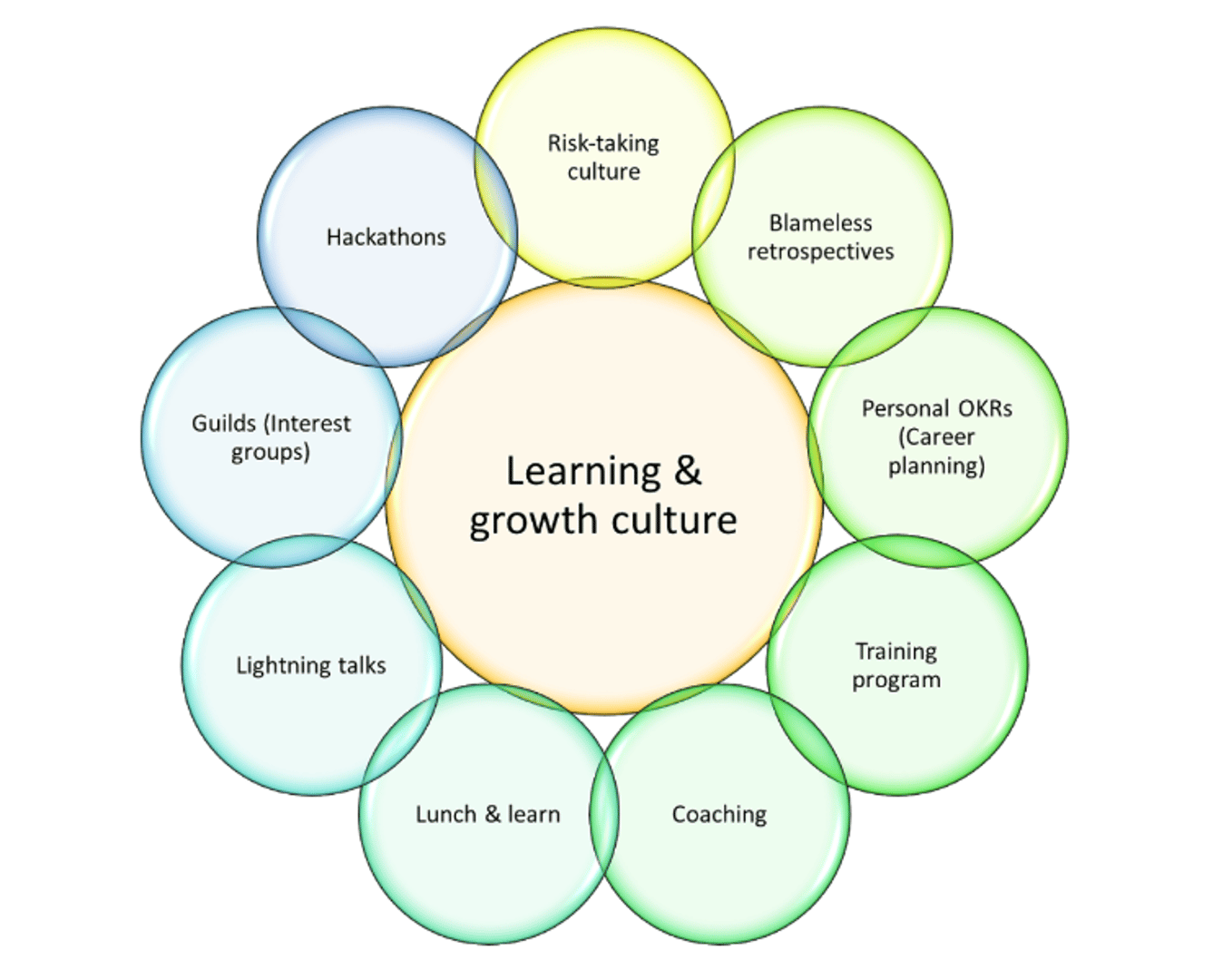
Continuous learning is key to staying competitive and
adaptable in a changing work environment. Offering access to courses,
conferences, or certification programs allows employees to expand their skills
and remain updated on industry trends. This culture of learning not only keeps
employees engaged but also shows them that the organization is committed to
their professional development. Encouraging lifelong learning instills a growth
mindset, making teams more adaptable and innovative.
If learning stops, innovation stops. And if innovation
stops, so does progress.
Products lose their competitive edge and, more importantly,
so do employees. The best people are eager to learn and grow; if they can’t,
they disengage and look for an employer more attuned to their needs.
You must work, by experimenting with different solutions, to build a culture of continuous learning. Continuous learning is key to staying competitive and adaptable in a changing work environment. Offering access to courses, conferences, or certification programs allows employees to expand their skills and remain updated on industry trends. This culture of learning not only keeps employees engaged but also shows them that the organization is committed to their professional development. Encouraging lifelong learning instills a growth mindset, making teams more adaptable and innovative.
YouTube. (2024).
Learning Styles
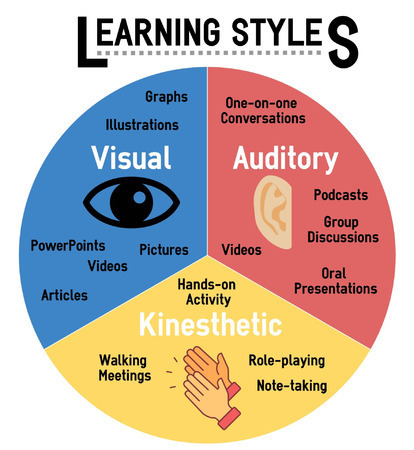
The Visual, Auditory, and Kinesthetic (VAK) learning
styles model classifies learners based on their preferred method of receiving
and processing information. Here's a breakdown:
Visual Learning
- Characteristics:
Visual learners prefer to see and observe things, such as pictures,
diagrams, written directions, and charts.
- Learning
Strategies:
- Use
of color-coded notes and highlighters.
- Incorporation
of visual aids like charts, graphs, and maps.
- Watching
videos and using flashcards.
Auditory Learning
- Characteristics:
Auditory learners prefer to listen and absorb information through sound
and speech.
- Learning
Strategies:
- Listening
to lectures, podcasts, and audiobooks.
- Participating
in group discussions and oral presentations.
- Using
mnemonic devices and reading aloud.
Kinesthetic Learning
- Characteristics:
Kinesthetic learners prefer a hands-on approach and learn best through
experience and practice.
- Learning
Strategies:
- Engaging
in physical activities and using gestures while learning.
- Using
manipulatives and experiments.
- Taking
frequent breaks to move around.
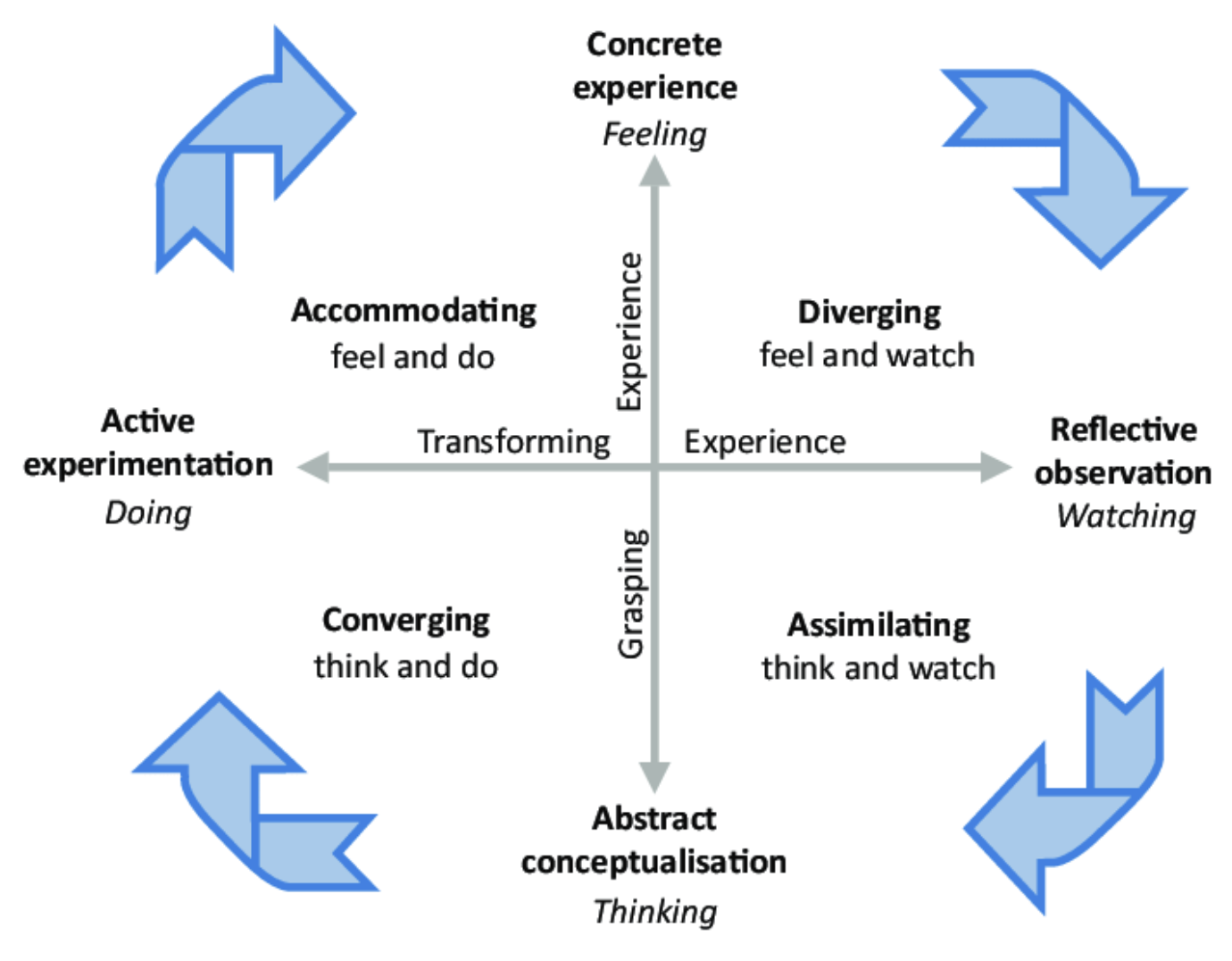
Kolb’s learning Cycle
in Flour Processing
In the context of flour production, visual, auditory, and
kinesthetic learning methods can be applied to enhance the training and
development of employees. These approaches can help employees understand and
perform tasks related to the technical and operational aspects of milling,
equipment maintenance, and quality control. Here’s how each learning style can
be utilized:
1. Visual Learning in Flour Production
• Process Flowcharts and Diagrams: Use
flowcharts to visually map out the entire production process, from grain intake
to final product packaging. This helps employees see each stage and understand
the overall workflow.
• Equipment Demonstrations and Video
Tutorials: Show visual demonstrations of milling equipment in use, maintenance
routines, and troubleshooting steps. High-quality videos with close-up shots
can help employees recognize equipment parts and understand their functions.
• Quality Control Standards: Display
visual guides for product quality, such as acceptable particle sizes, color
standards, and packaging specifications, which help employees visually compare
and assess product quality.
2. Auditory Learning in Flour Production
• Instructional Audio Guides: Provide
audio instructions or guides for each step in the production process,
especially for tasks that may have multiple steps or require strict adherence
to procedures.
• Team Briefings and Discussions:
Regular team meetings or “stand-ups” allow employees to hear updates, safety
protocols, and procedural changes. This can help reinforce teamwork and
communication.
• Auditory Cues in Machinery Operation:
Encourage employees to recognize sounds in the production environment, such as
the hum or clank of machinery, which can indicate when equipment is operating
smoothly or may need maintenance.
3. Kinesthetic Learning in Flour Production
• Hands-On Training with Equipment:
Allow employees to physically engage with equipment, from operating milling
machines to handling grain samples and monitoring flow rates. Practicing in a
real environment enables them to gain confidence and muscle memory for complex
tasks.
• Interactive Quality Testing: Provide
hands-on opportunities to conduct quality checks, such as feeling for the right
texture of flour or testing for moisture levels. This tactile engagement
reinforces quality standards.
• Simulation Exercises: Set up
practical scenarios where employees can respond to production issues, like an
equipment breakdown or a variation in grain quality. These simulations help
build problem-solving skills and allow employees to practice corrective
actions.
Integrating Learning Styles for Flour Production
A well-rounded training program in flour production can
incorporate visual, auditory, and kinesthetic learning methods to maximize
retention and understanding. For example, employees can watch a demonstration
video (visual), listen to an instructor explain the steps (auditory), and then
practice the task themselves (kinesthetic). By catering to different learning
preferences, this approach helps ensure that all employees have a thorough
understanding of the processes, equipment, and quality standards essential to
flour production.
References
- Klipfolio.com. (n.d.). Why a learning culture is important – and why your organization needs one. [online] Available at: https://www.klipfolio.com/blog/continuous-learning-culture.
- YouTube. (2024). Fostering a Culture of Continuous Learning | Creativity and Innovation. [online] Available at: https://youtu.be/kQOKwZFPkAE [Accessed 7 Nov. 2024].
Jms.sch.id. (2024). Available at: https://jms.sch.id/wp-content/uploads/2022/09/LearningStyles.jpg [Accessed 7 Nov. 2024].
ducationaltechnology.net. (2022). Available at: https://educationaltechnology.net/wp-content/uploads/2020/12/kolb-learning.png
Researchgate.net. (2024). Kolbs-model-of-learning-styles-Adapted-from-Kolb-D-A-Experiential-Learning.tif (850×781). [online] Available at: https://www.researchgate.net/profile/Lina_Henze/publication/317127785/figure/fig1/AS:560247828946944@1510584899110/Kolbs-model-of-learning-styles-Adapted-from-Kolb-D-A-Experiential-Learning.png [Accessed 7 Nov. 2024].


Continuous learning is key factor to develop individual carrier
ReplyDeleteYour approach to continuous learning is strong, especially the integration of Kolb's learning cycle and varied learning styles in flour production. By combining visual, auditory, and kinesthetic methods, you ensure employees can grasp tasks more effectively. This tailored training boosts engagement and innovation, driving better performance and adaptability.
ReplyDeleteHow could digital tools like VR or AR enhance kinesthetic learning in flour production?
Continuous learning is essential in today's fast paced world. moreover it encourages critical thinking,one's perspective and deeper understanding.your article would be more helpful for all the organization learners.
ReplyDeleteIntegrating these approaches into training programs ensures that all employees can effectively understand and apply new skills.
ReplyDeleteCreating a culture of continuous learning is essential for both individual and organizational growth. Intresting article.
ReplyDeleteCreating a culture of continuous learning is essential for both individual and organizational growth.
ReplyDeleteI love how this highlights the importance of continuous learning! Fostering a learning culture can really drive innovation and employee satisfaction in any organization.
ReplyDeleteWhat are some practical steps an organization can take to encourage employees to embrace a culture of continuous learning, especially in a hybrid or remote work environment?
Creating a culture of continuous learning encourages ongoing skill development, adaptability, and innovation, helping employees stay engaged and organizations remain competitive in a rapidly evolving landscape. Most important article.
ReplyDeleteThis will create future leaders and will be a strong succession plan.
ReplyDeleteThis article emphasizes the importance of continuous learning in maintaining competitiveness and fostering innovation, while also highlighting the application of various learning styles (visual, auditory, and kinesthetic) in training programs to enhance employee development in industries like flour production. By integrating these diverse learning methods, organizations can better engage employees and ensure effective knowledge retention.
ReplyDeleteSo much value packed into one article!
ReplyDelete